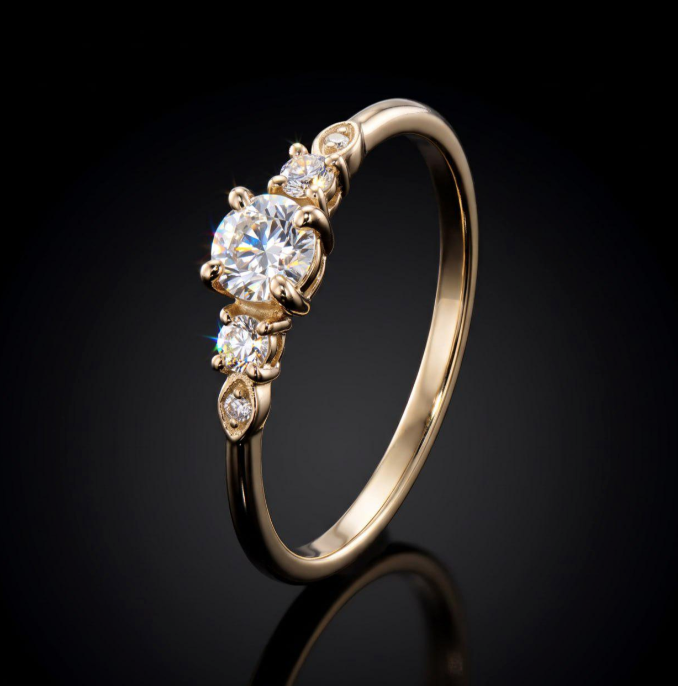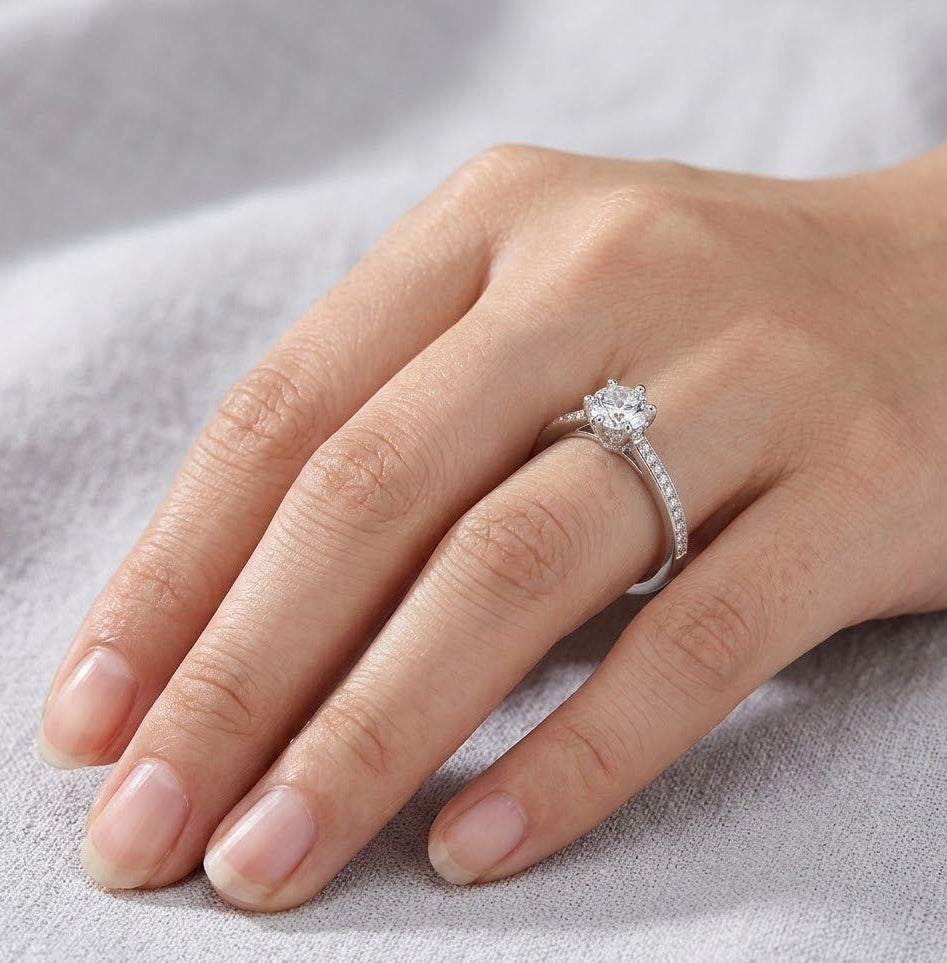

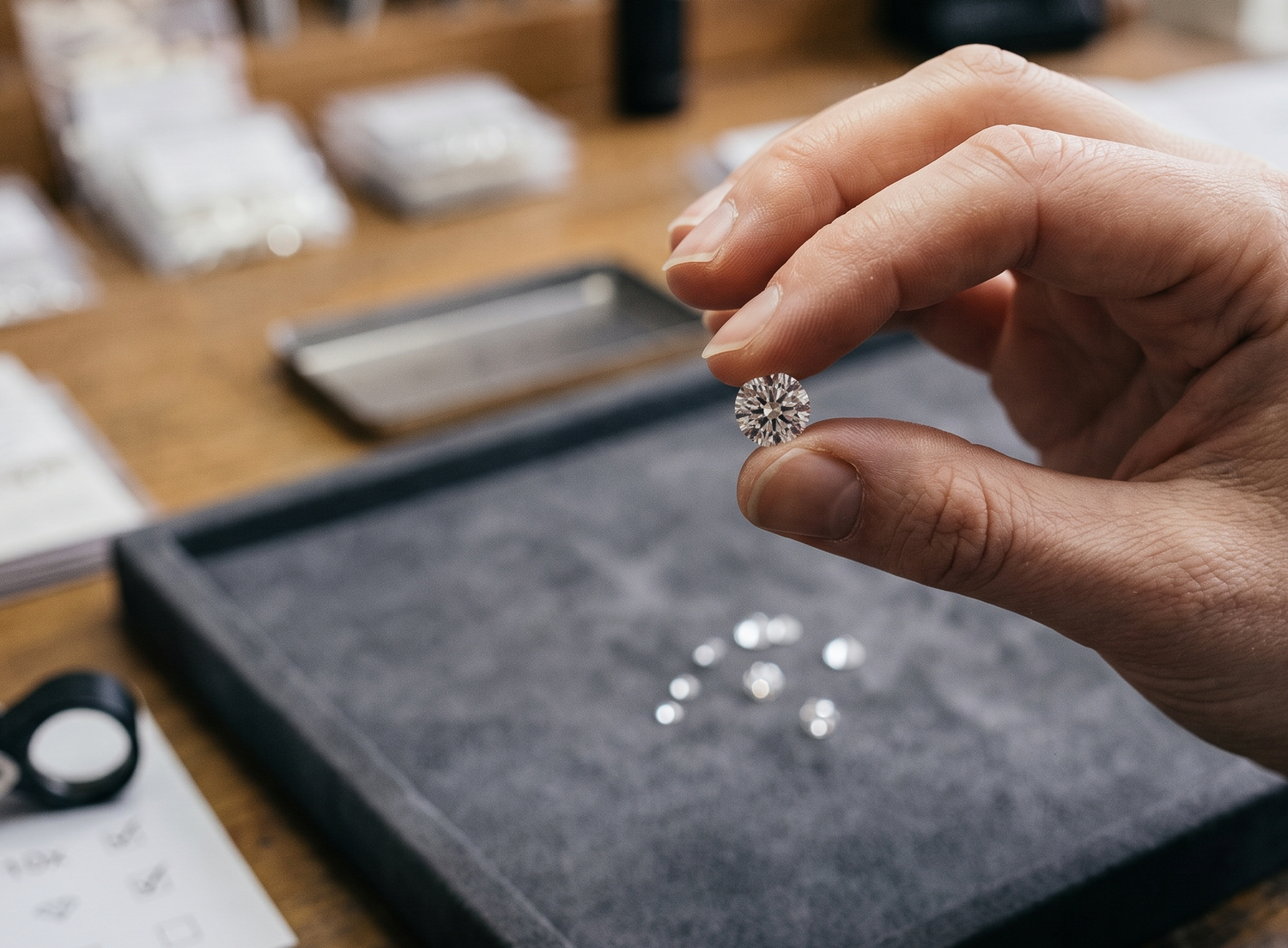
Whether you’ve inherited a vintage family ring, found a loose stone, or simply want peace of mind about your daily jewelry, knowing if your diamond is authentic is a common dilemma.
While home tests are quick and fun to try, no single DIY method provides a 100% guarantee. For true certainty, a combination of quick checks and professional gemological tools is the best approach.
Here is a simple, modern guide on how to test your stone at home—and when to leave it to the pros.

At a Glance
Quick At-Home Checks: Use the Fog Test (diamonds clear instantly) or the Dot Test (refraction blocks the dot).
Pro Tools: Thermal diamond testers and 10x loupes check for high heat conductivity and razor-sharp facet edges.
The Ultimate Proof: Look for a GIA or IGI certificate and a matching laser inscription on the stone’s girdle.
3 Quick DIY Tests You Can Do at Home
These simple experiments rely on the unique physical properties of diamonds—mainly density, high thermal conductivity, and intense light refraction. (Note: These work best on unmounted, loose stones).
1. The Fog (Breath) Test
Diamonds scatter heat almost instantaneously.
-
How to do it: Hold the stone between your fingers and puff a warm breath onto it, just like fogging up a bathroom mirror.
-
The Result: If it's a real diamond, the fog will disappear instantly (within a fraction of a second). If it stays foggy for 2–4 seconds, you're likely looking at cubic zirconia (CZ) or glass.
2. The Water Density Test
Diamonds are extremely dense minerals compared to most imitations.
-
How to do it: Drop your loose stone into a glass filled with normal room-temperature water.
-
The Result: A real diamond will sink straight to the bottom immediately. Fake materials or cheap glass imitations often float or hover near the middle.

3. The Dot Test (Light Refraction)
Diamonds bend light so intensely that you cannot look straight through them.
-
How to do it: Draw a small black dot with a pen on a sheet of white paper. Place your loose stone flat-side (table) down directly over the dot. Look straight down through the pointed tip (culet).
-
The Result: With a real diamond, you will not see the dot due to the stone’s extreme light refraction. If you can clearly see the black dot or a ring reflection through the stone, it’s a fake.
Professional & Tool-Based Verification
If your stone passes the DIY tests, these industry-standard methods provide a much higher level of accuracy.
      PHYSICAL PROPERTIES AT A GLANCE
┌──────────────────┬──────────────────┬──────────────────┐
│ PROPERTY         │ REAL DIAMOND     │ COMMON FAKE (CZ) │
├──────────────────┼──────────────────┼──────────────────┤
│ Heat Transfer    │ Ultra-Fast       │ Slow             │
│ Facet Edges      │ Razor-Sharp      │ Rounded / Soft   │
│ Inclusions       │ Natural Imperf.  │ Flawless /Bubbles│